Why Upgrade to LiFePO4 for Your Golf Cart
The Hidden Cost of Sticking with Lead-Acid Batteries
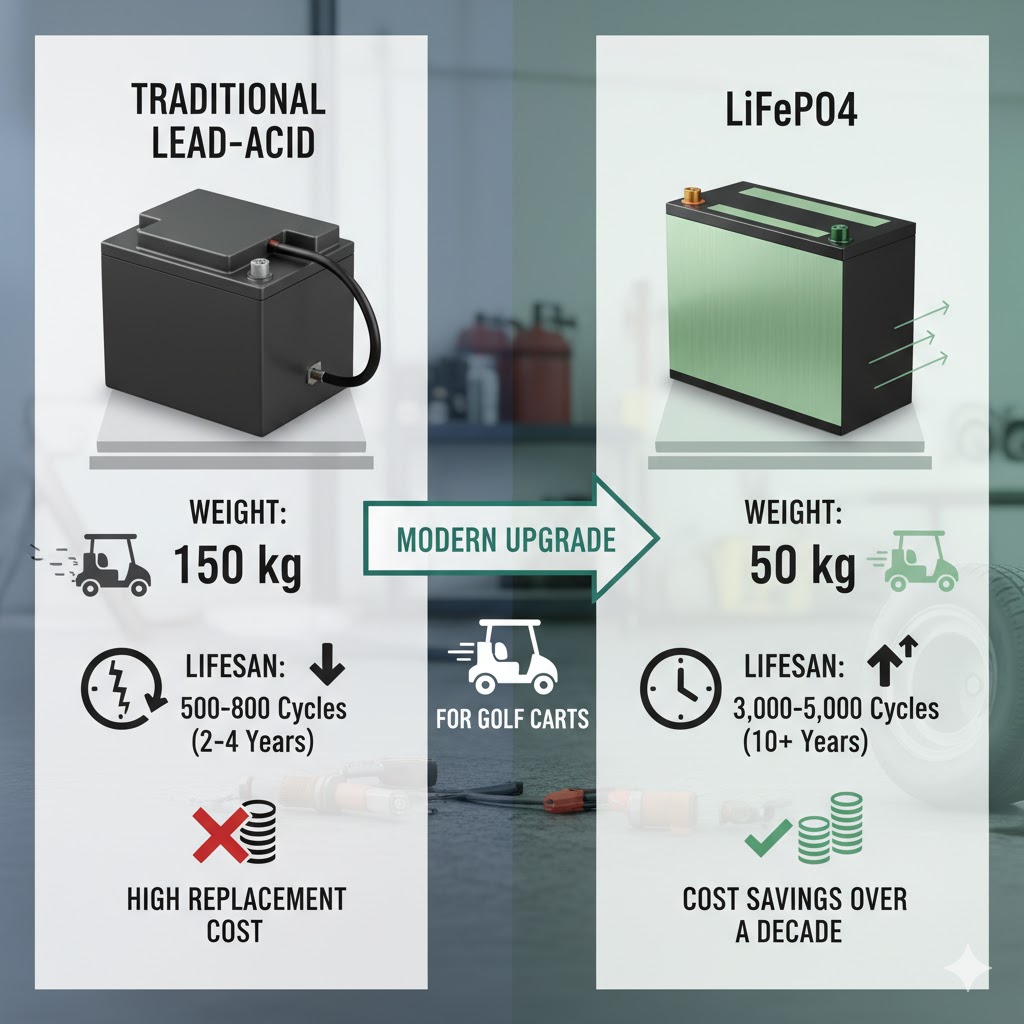
Every time you water your golf cart batteries or wait 8 hours for a full charge, you’re losing time and money. Traditional lead-acid batteries might seem affordable upfront, but their 500-800 cycle lifespan means replacing them every 2-4 years. For a typical golf course with 50 carts, that’s over $30,000 in replacement costs alone over a decade. Meanwhile, LiFePO4 (Lithium Iron Phosphate) batteries last 3,000-5,000 cycles—up to 10 years of reliable use. The question isn’t if you should upgrade, but how much you’re already losing by not switching.
1. 70% Less Weight, 40% More Range
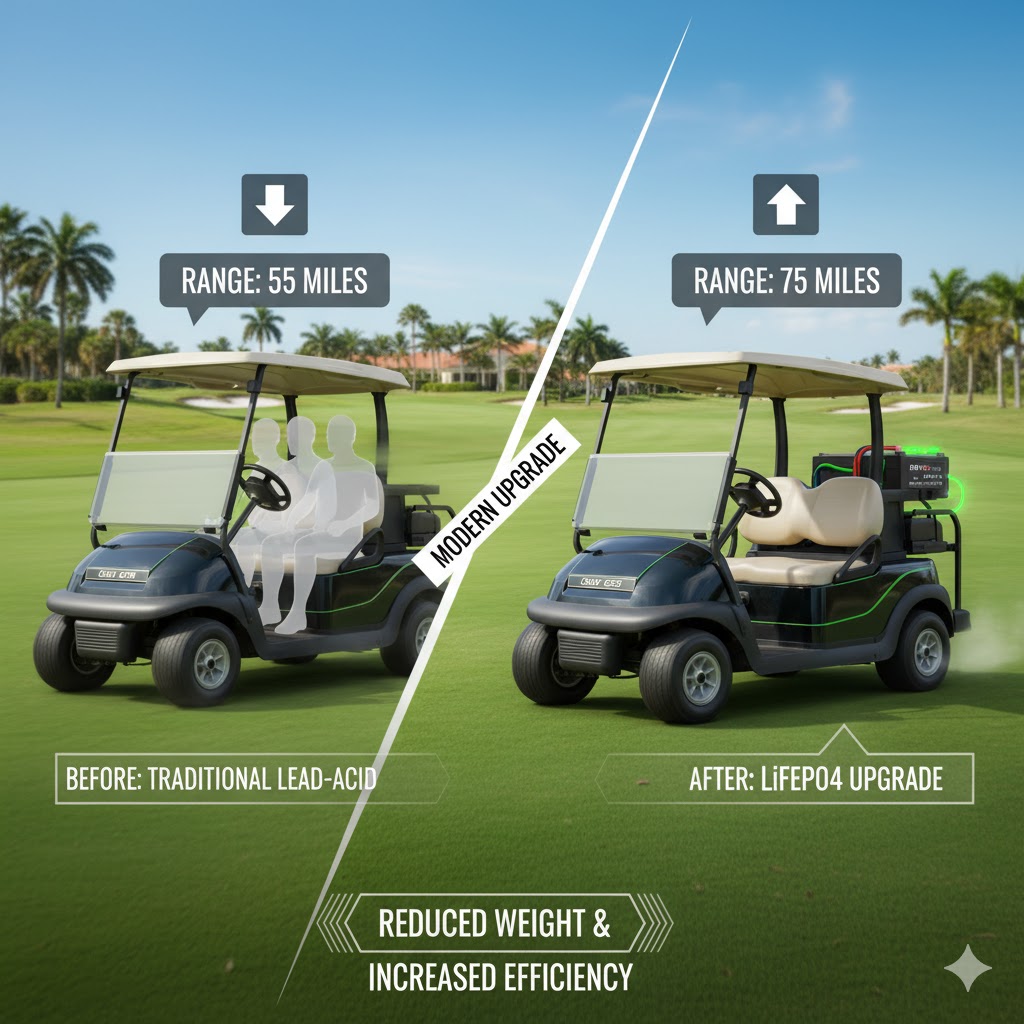
A standard 48V lead-acid battery pack weighs 150 kg, while a LiFePO4 equivalent tips the scales at just 50 kg—that’s like removing three average passengers from your cart. This weight reduction cuts energy waste, boosting range by 30-50%. For example, a Club Car DS with a 48V 100Ah LiFePO4 battery now travels 75 miles per charge instead of 55 miles with lead-acid. Florida golf resorts report reducing daily charging stops by 60% after upgrading, letting carts stay on the course longer.
2. Charge in 2 Hours, Not 8
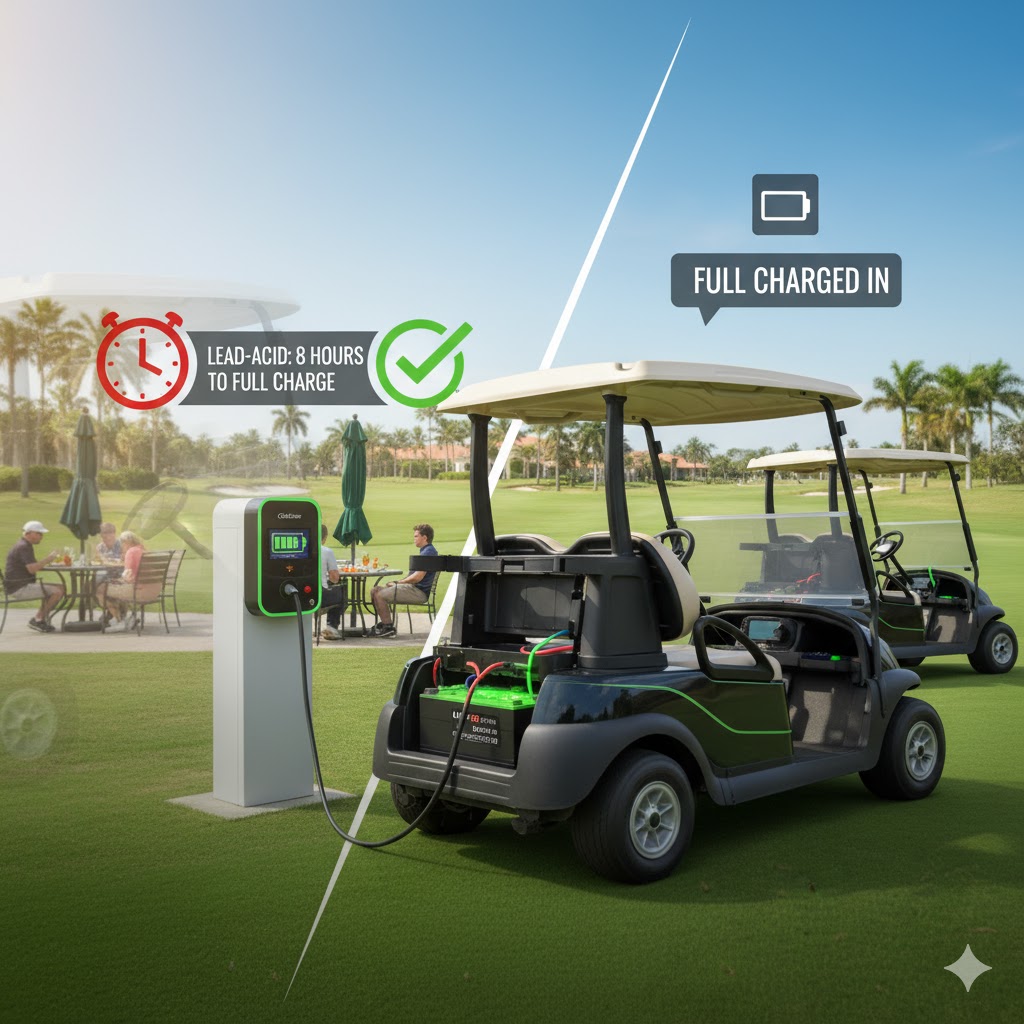
LiFePO4 batteries accept 1C fast charging, meaning a 100Ah battery can recharge in just 2 hours with a compatible charger. Compare that to lead-acid’s glacial 8-10 hour cycle. “We used to need two shifts of carts to cover peak hours,” says a California course manager. “Now we charge during lunch breaks and run 24 carts nonstop.” Advanced BMS (Battery Management Systems) prevent overcharging, even if you plug in overnight.
3. Zero Maintenance, Zero Headaches
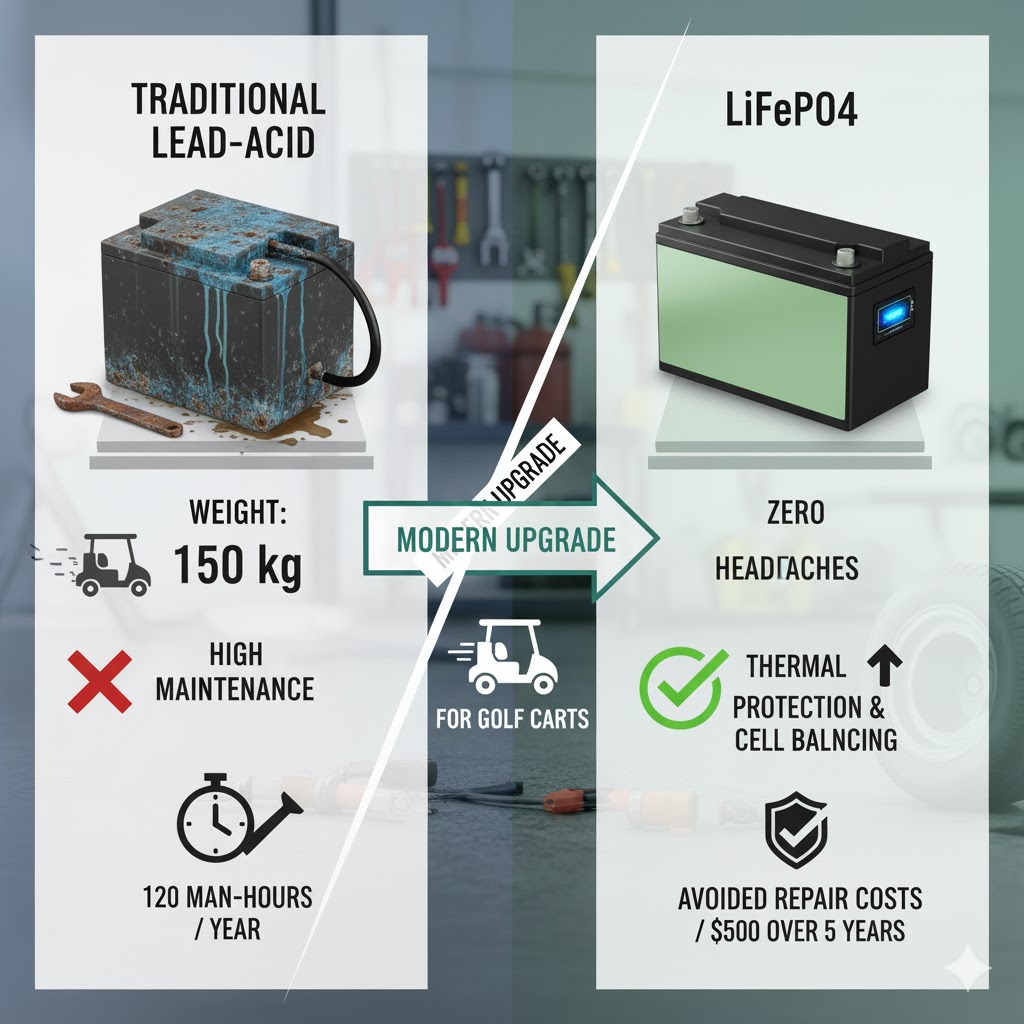
Forget monthly water top-ups, terminal cleaning, or sulfate buildup. LiFePO4 batteries are sealed and maintenance-free, with built-in thermal protection and cell balancing. A Texas country club calculated saving 120 man-hours/year on battery upkeep after switching. Plus, there’s no risk of acid leaks damaging cart floors or corroding terminals—a $500 repair cost avoided per cart over 5 years.
4. Stable Power Through 18 Holes (and Beyond)
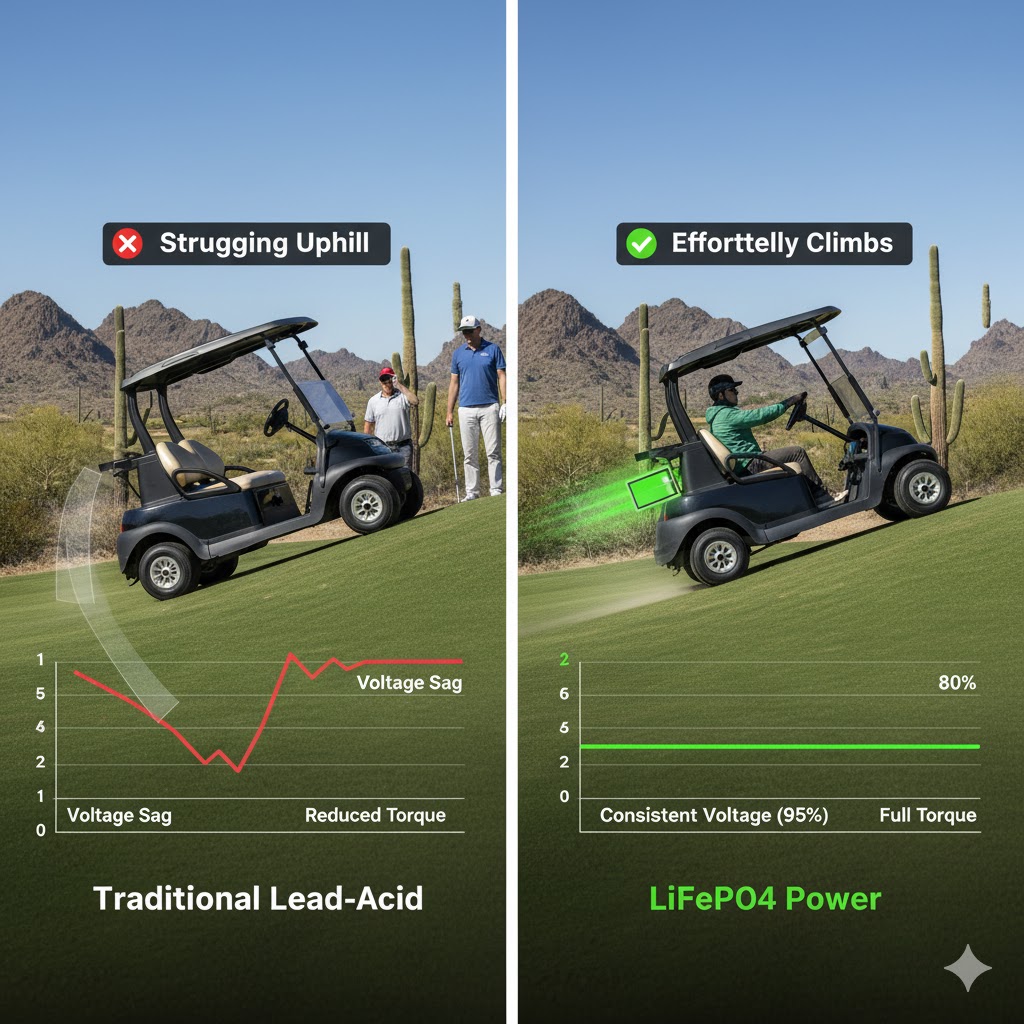
Lead-acid batteries suffer voltage sag under load, dropping from 48V to 38V as they discharge—slowing acceleration and reducing hill-climbing power. LiFePO4 maintains 95% of voltage until 80% depth of discharge (DoD), delivering consistent torque even on back-nine hills. “Our carts used to struggle on the 15th fairway incline,” notes a Arizona pro shop manager. “Now they climb at full speed, no matter the charge level.”
5. 40% Lower Total Cost of Ownership
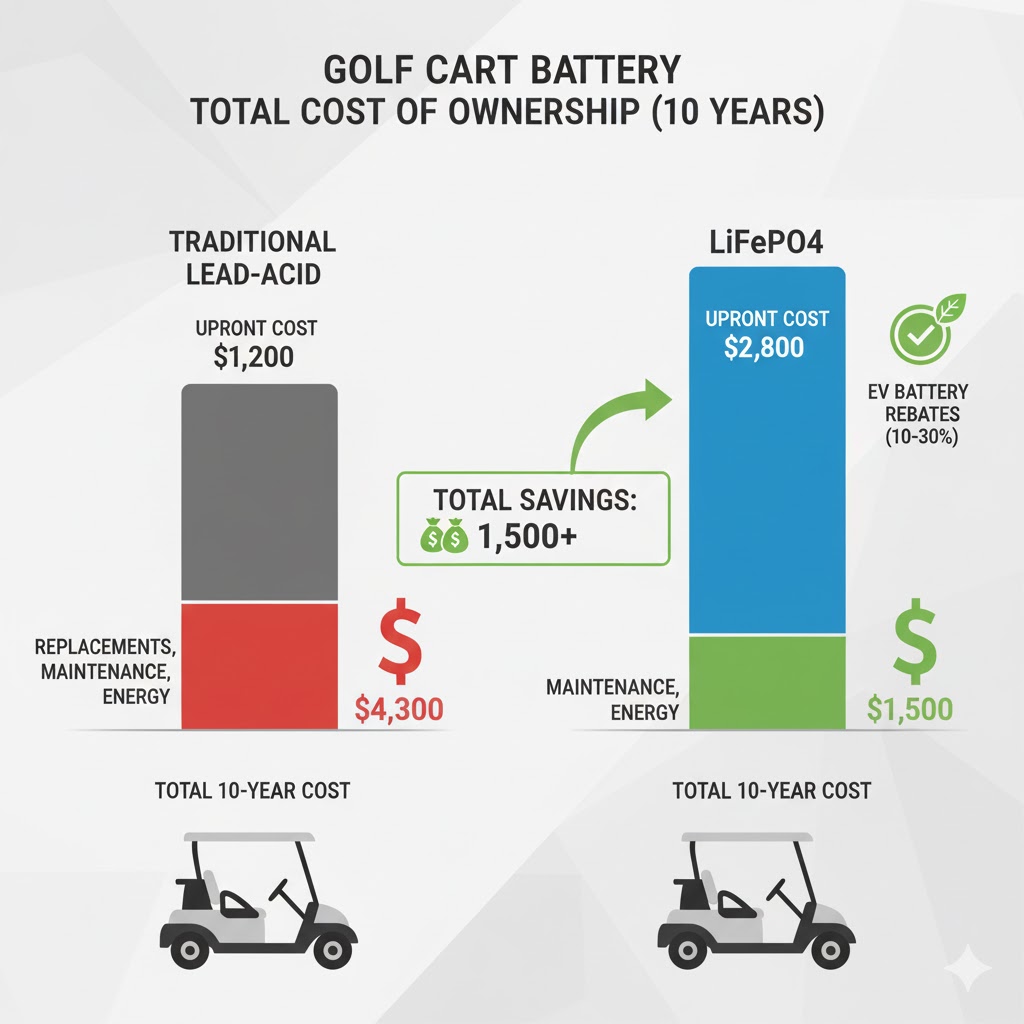
While LiFePO4 batteries cost 2-3x more upfront ($2,800 vs. $1,200 for a 48V pack), their 8-10 year lifespan crushes lead-acid’s 2-4 years. Factoring in replacement, maintenance, and energy costs, LiFePO4 saves $1,500+ per cart over a decade. Some states even offer EV battery rebates (10-30% of cost) for golf cart upgrades—check local programs to offset initial investment.
Step-by-Step LiFePO4 Installation Guide
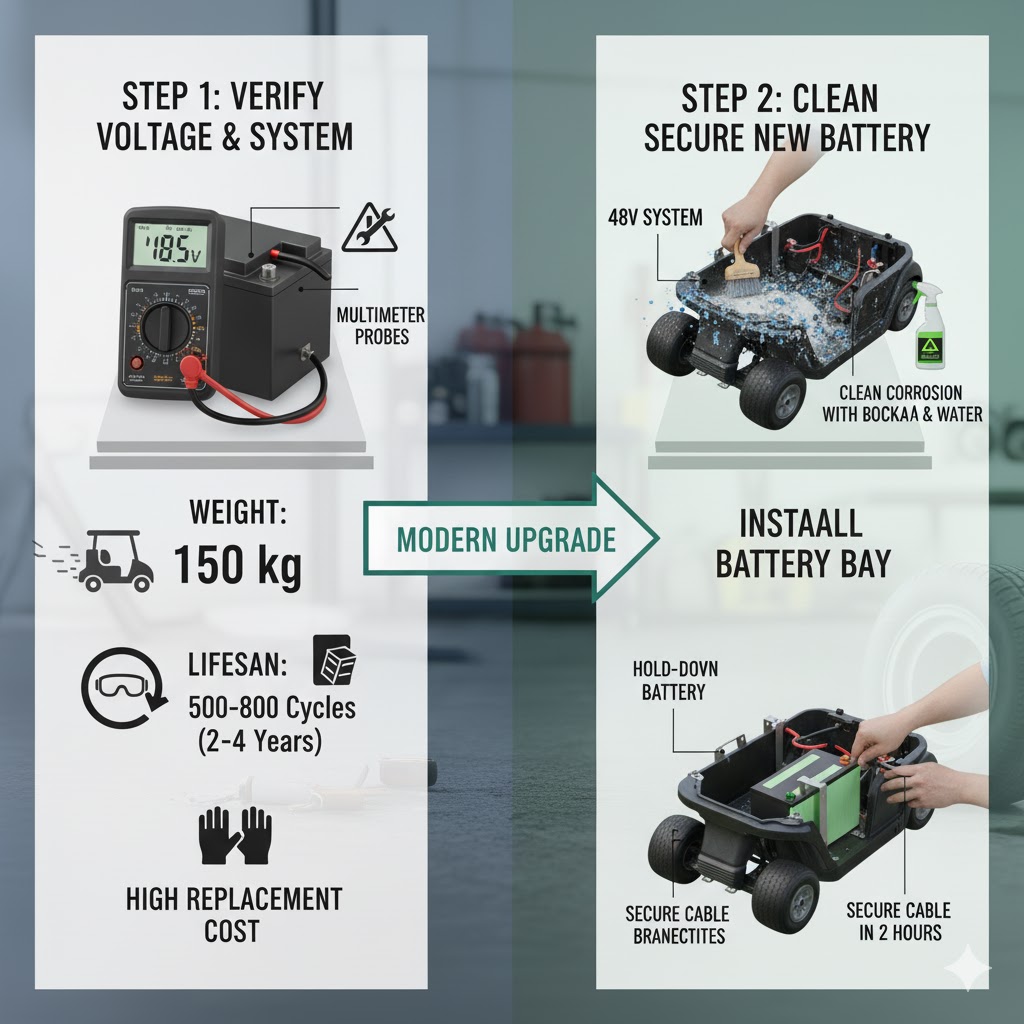
1. Verify Voltage Compatibility
- Check your cart’s system voltage (36V, 48V, or 72V) using a multimeter.
- Replace 6x8V lead-acid batteries with a 48V LiFePO4 pack (e.g., 16S1P configuration).
- Warning: Never mix battery chemistries—this causes voltage mismatches and BMS failure.
2. Prepare the Battery Bay
- Remove old lead-acid batteries and clean corrosion with baking soda solution.
- Measure the tray dimensions to ensure a snug fit (most LiFePO4 packs are drop-in replacements).
- Add防震垫 to reduce vibration damage during off-road use.
3. Install and Connect
- Secure the LiFePO4 battery with provided brackets (critical for safety during sharp turns).
- Connect positive (+) and negative (-) terminals, torquing to 8 ft-lbs to prevent arcing.
- Attach the BMS communication cable to the cart’s controller (if compatible) for real-time monitoring.
4. Update Charging System
- Replace lead-acid charger with a LiFePO4-specific model (e.g., 58.4V for 48V packs).
- Enable low-temperature charging mode if you golf in climates below 0°C—some batteries include self-heating pads.
- Test charge cycle to confirm BMS cuts off at 58.4V (prevents overcharging).
Real-World Results: 3 Golf Cart Upgrade Case Studies
Private Owner: From Frustration to Freedom
A Florida retiree with a 2018 EZGO RXV struggled with lead-acid batteries dying mid-round. After installing a 48V 105Ah LiFePO4 pack:
- Range increased from 40 to 65 miles per charge
- Charging time dropped from 10 hours to 3 hours
- Weight reduction improved hill climb speed by 15%
“I used to plan my day around charging. Now I golf twice and still have juice left for errands.”
Golf Course Fleet: ROI in 2.5 Years
A North Carolina course with 30 carts upgraded to LiFePO4:
- Annual savings: $12,000 on replacements + $8,000 on labor
- Cart availability: 98% uptime (vs. 82% with lead-acid)
- Environmental impact: Eliminated 200+ lead-acid batteries from landfills
“We hit break-even faster than expected. The carts run longer, and guests notice the smoother ride.”
Resort Property: All-Terrain Performance
A Colorado mountain resort needed batteries that handle -20°C winters and rough trails:
- LiFePO4 retained 85% capacity in freezing temps (lead-acid dropped to 50%)
- Sealed design prevented snow/moisture damage
- Modular packs allowed adding 20Ah for winter range extension
“Our guests drive 10 miles daily on unpaved roads. These batteries just don’t quit.”
Is LiFePO4 Right for Your Golf Cart?
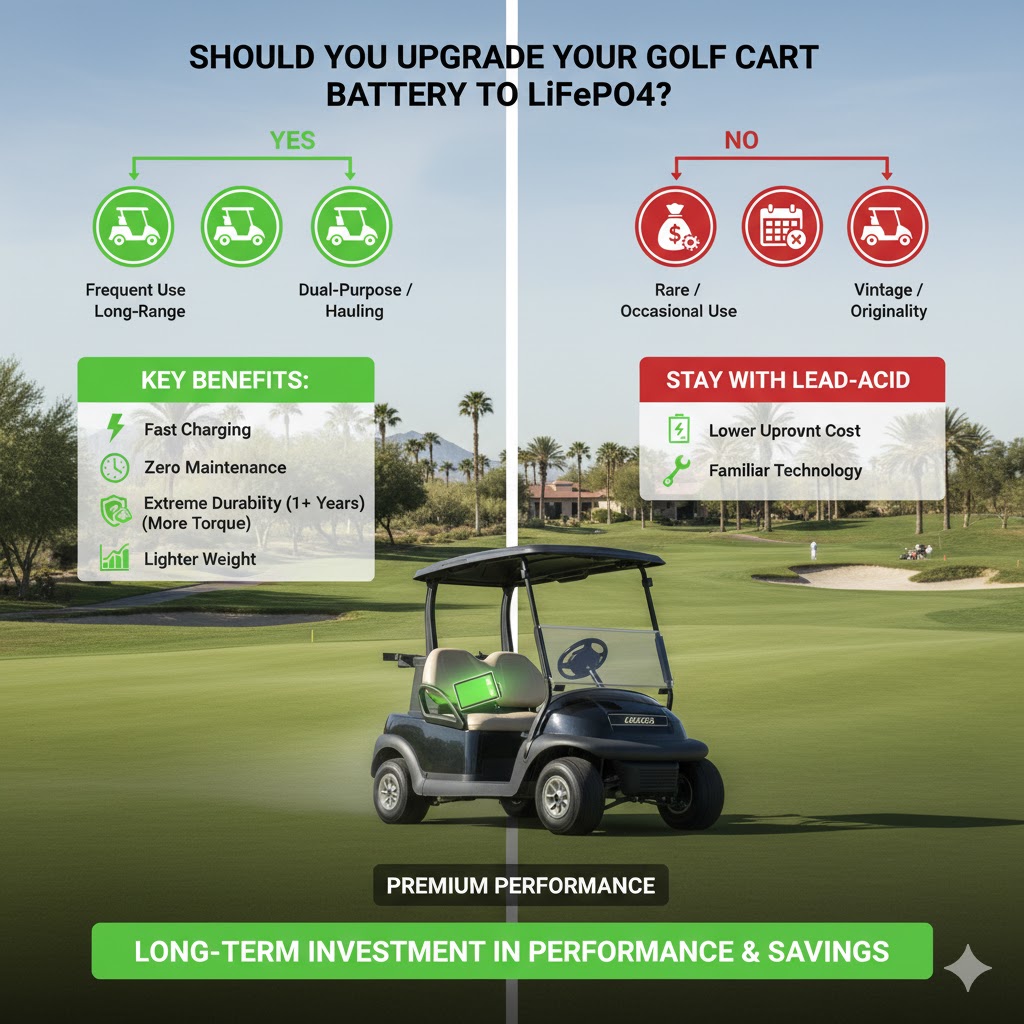
Upgrade if:
- You golf 3+ times/week (frequent use accelerates lead-acid degradation)
- Your cart serves dual purposes (golf + neighborhood transportation)
- You want to increase resale value (LiFePO4 is a premium selling point)
- Maintenance costs or downtime are impacting enjoyment
Stick with lead-acid if:
- You use the cart <10 times/year (minimal wear on cheaper batteries)
- You own a vintage cart with incompatible electrical systems
- Upfront cost is the only consideration (but factor in 2-3 replacements)
The Future of Golf Cart Power is Here
LiFePO4 batteries transform golf carts from high-maintenance utilities into reliable, high-performance vehicles. With 10-year lifespans, fast charging, and unmatched durability, they’re not just an upgrade—they’re a long-term investment in enjoyment and efficiency. Whether you’re a weekend golfer or managing a fleet, the math is clear: lead-acid costs more over time, while LiFePO4 delivers consistent value from the first charge.
Ready to cut charging time, boost range, and eliminate maintenance? Your golf cart (and your wallet) will thank you.
Disclaimer: Always consult a certified technician before modifying your golf cart’s electrical system. Battery performance varies based on cart model, terrain, and usage patterns. UL 1973 certification recommended for safety.