How Long Do Lithium Golf Cart Batteries Last? (Real Lifespan Data)
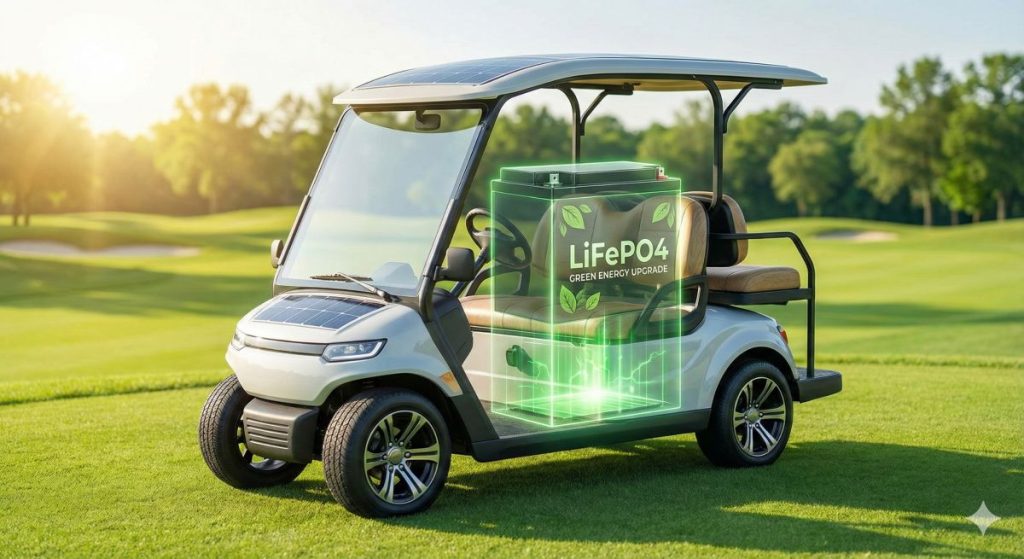
For decades, golf cart owners have been stuck in a cycle of maintenance and replacement. If you’ve owned a cart for a few years, you know the drill: checking water levels, scrubbing off corrosion, and eventually shelling out hundreds of dollars for a new set of lead-acid batteries every few seasons.
But the industry has shifted. The question on every cart owner’s mind today is: How long do lithium golf cart batteries last?
The short answer? A long time. But the real data behind lithium golf cart battery life reveals why this technology is more than just a luxury upgrade—it’s a fundamental change in how we power our vehicles.
The Average Lifespan of Lithium Golf Cart Batteries
When you ask how long do lithium batteries last in a golf cart, the industry data is clear. A high-quality lithium iron phosphate (LiFePO4) battery typically lasts between 8 to 10 years.
Unlike traditional batteries that are rated by a simple time frame, lifespan of lithium golf cart batteries is best measured in “cycles.” A cycle is one full discharge and recharge.
- Lithium: Rated for 3,000 to 5,000 cycles.
- Lead-Acid: Rated for just 500 to 1,000 cycles.
To put this in perspective: If you use your golf cart for a full round of golf every single day of the year, a lithium battery rated for 3,500 cycles would theoretically last over 9 years before losing significant capacity. For the average recreational user playing a few times a week, the battery can easily last 10 to 15 years, often outliving the cart itself.
Lithium vs Lead Acid Golf Cart Batteries: A Lifespan Comparison
To understand the value, we have to look at the lithium vs lead acid golf cart batteries comparison head-to-head. It isn’t just about years; it’s about how they age.
Lead-acid batteries suffer from “sulfation”—a chemical process where lead sulfate crystals harden on the plates if the battery isn’t charged immediately or kept full of water. This is why their lifespan is so short (typically 3–5 years).
Lithium batteries do not have this memory effect. They don’t degrade just because they sit partially charged. Here is the breakdown:
| Feature | Lead-Acid (Flooded) | Lithium (LiFePO4) |
| Average Lifespan | 3 – 5 Years | 8 – 10+ Years |
| Cycle Life | 500 – 1,000 | 3,000 – 5,000 |
| Maintenance | High (Watering required) | Zero (Sealed) |
| Warranty | 1 – 2 Years | 5 – 10 Years |
| Weight | ~350 lbs | ~70 – 100 lbs |
As you can see, lithium golf cart battery life is superior not just in duration, but in durability.
Factors That Influence How Long a Lithium Battery Lasts
While lithium is robust, certain habits can maximize your investment.
How Often Should You Charge Lithium Golf Cart Batteries?
One of the biggest myths is that you need to drain a battery to 0% before charging. This is false for lithium. In fact, “opportunity charging”—plugging your cart in for a quick boost during lunch or between rounds—is actually beneficial.
For the best lifespan, simply plug your cart in after you are done using it for the day. High-quality lithium chargers and Battery Management Systems (BMS) stop the charge automatically when full, so you cannot overcharge them.
Critical Warning: Never charge a standard lithium battery if the temperature is below freezing (32°F / 0°C). Doing so can permanently damage the cells. Look for batteries with cold-weather protection or self-heating features if you live in a cold climate.
Do Lithium Golf Cart Batteries Need Water?
This is a common question from longtime cart owners: Do lithium golf cart batteries need water?
No. Lithium batteries are sealed units. They require absolutely no water, no acid checks, and no terminal cleaning. This eliminates the #1 cause of battery failure: human error in maintenance.
Performance Metrics: Capacity and Range
Longevity isn’t just about years; it’s about daily performance. How many miles does a lithium golf cart battery last on a single charge?
It depends on the voltage (V) and Amp-hours (Ah) of your system, but here are the averages for a standard 48V system:
- Standard (60Ah): ~25–30 miles (Good for 1 round of golf + neighborhood driving).
- Extended (100Ah): ~40–50 miles (Good for 2 rounds of golf + extensive driving).
- Long Range (160Ah+): ~70+ miles.
Note: If you have a lifted cart with large tires, expect roughly 20-30% less range due to the increased rolling resistance.
Are Lithium Golf Cart Batteries Worth It?
When you see the price tag—often double that of lead-acid—it’s natural to ask: Are lithium golf cart batteries worth it?
Let’s look at the 10-year timeline:
- Lead-Acid: You will likely buy 3 sets of batteries over 10 years (Year 1, Year 4, Year 8). Total cost: ~$3,000+ plus maintenance supplies.
- Lithium: You buy 1 set in Year 1. Total cost: ~$2,000 – $2,500.
Beyond the raw savings, you also increase the resale value of your cart. A used cart with a lithium battery commands a premium price ($1,000+) compared to one with aging lead-acid batteries.
The Verdict: If you plan to keep your cart for more than a few years, the math is simple. The extended lifespan of lithium golf cart batteries combined with zero maintenance makes them the smartest investment for your vehicle.